
Klue’s teams built more with Nectar once it became simpler to use and easy to get help with.
Nectar
Our co-founder led design at Klue from 2022 to 2025 and directed this work there.
Klue’s design team simplified Nectar and built a guild and open office hours around it. Designers and engineers used the system more and shipped faster, and Klue’s customers moved through a more consistent product with less effort.
- Company
- Klue
- Place
- Vancouver, BC
- Sector
- Software
- Years
- 2022 to 2025
- What Klue’s team built
- A simplified component library, design tokens, accessible patterns, documentation, a guild with office hours and a formal process for extending the system
- Design direction
- Adam Bognar, Director of Design at Klue
- Design and engineering
- Klue’s design and engineering teams
What they needed
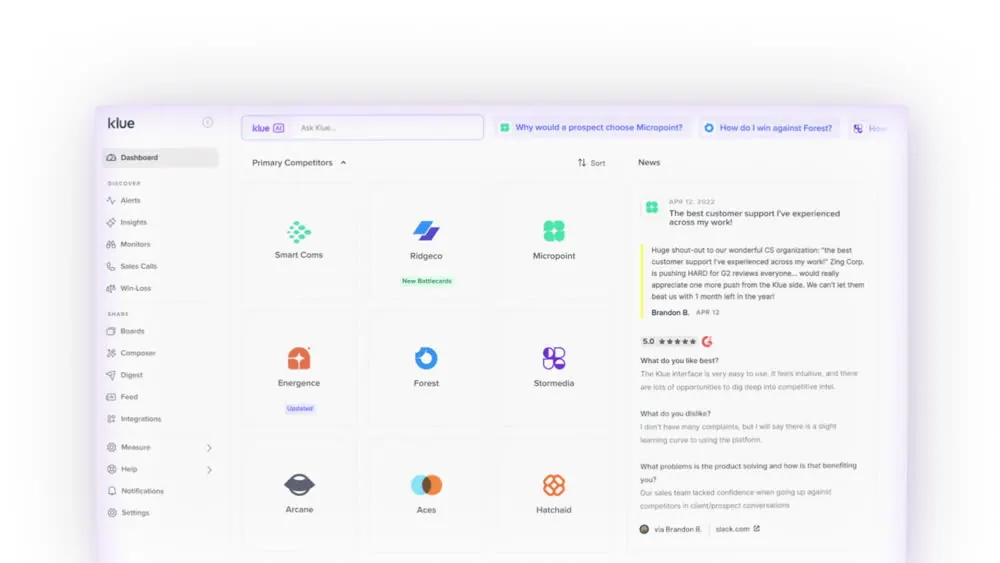
Klue makes competitive-intelligence software in Vancouver, and its designers and engineers build the product side by side. The product had grown quickly, and Nectar, the design system meant to hold it together, had grown with it. Overlapping components and legacy patterns made the right piece slow to find, and the designs had drifted away from the code engineering shipped.
Klue needed a system both teams would reach for first because it was the quickest way to build well. It also had to keep improving after its first release, with accessibility carried into every component.
What Klue’s team did
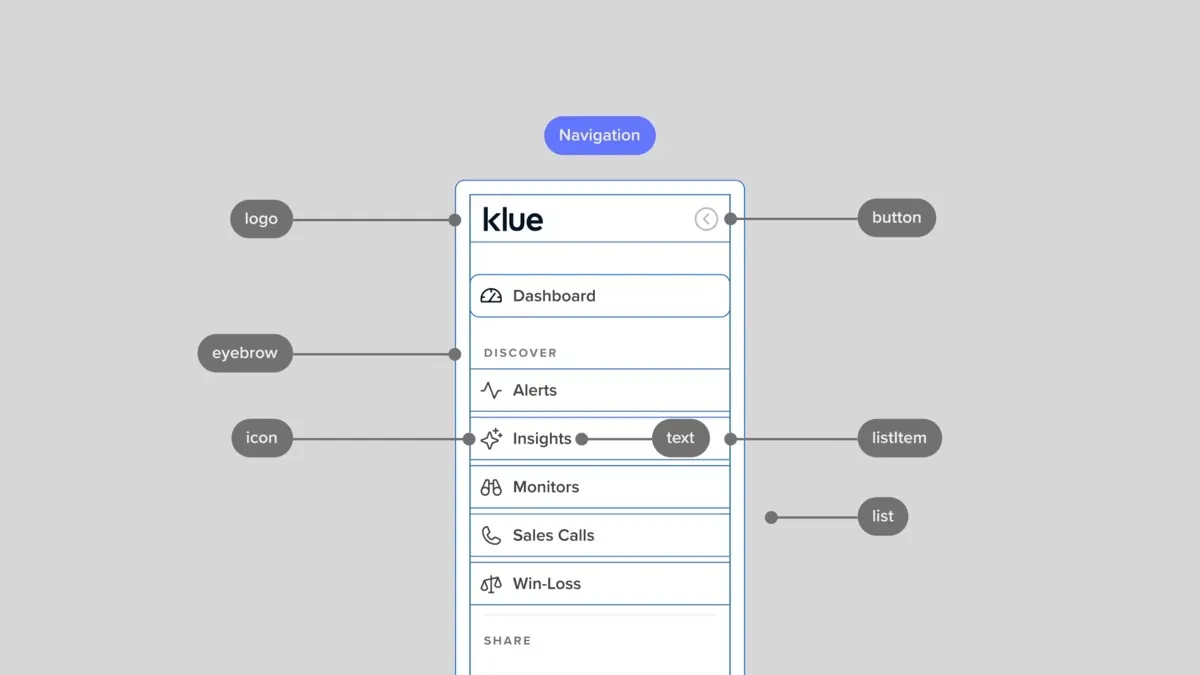
Klue’s design team started by simplifying what was already there. Duplicate components came out. The core components were rebuilt so each did one job well, and every choice that remained came with a written rule for when to use it. With fewer, clearer options, the right component became the obvious one, and the button family alone went from 63 variants to 12.
The team wrote up each component in enough depth that nobody had to guess how it behaved. Every one shipped with guidance on when and how to use it and an accessible pattern behind it, and its values came from design tokens that designers and engineers shared. The team formed a guild of designers and engineers to look after Nectar and held office hours where anyone building with it could bring a question or a problem.
Growing the system became a set process. A new component, or a change to one, followed a formal path that was automated wherever the steps repeated, so Nectar could keep pace with the product without drifting from it.
What changed
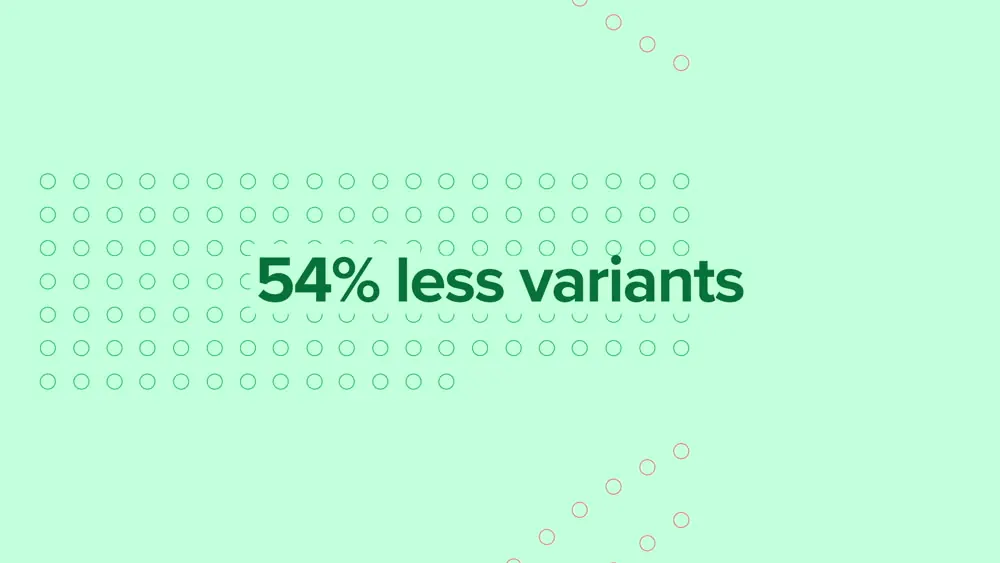
Designers and engineers used Nectar more, and more of the product came to be built from it. Delivery on the work Klue tracked sped up by about 30 percent, and variants across the component library fell by more than half.
The people using Klue’s product gained as well. The interface behaved the same way from screen to screen, so customers found their way through it faster and came back to it more often. Klue went on to build its brand refresh and its vision for the product on Nectar.